How do you calculate BMI?
BMI is calculated by dividing weight by height squared. In US units, the formula includes a conversion factor of 703.
Fitness Calculator
Calculate your body mass index using height and weight with US or metric units. Use it as a simple screening tool and a starting point for body composition conversations.
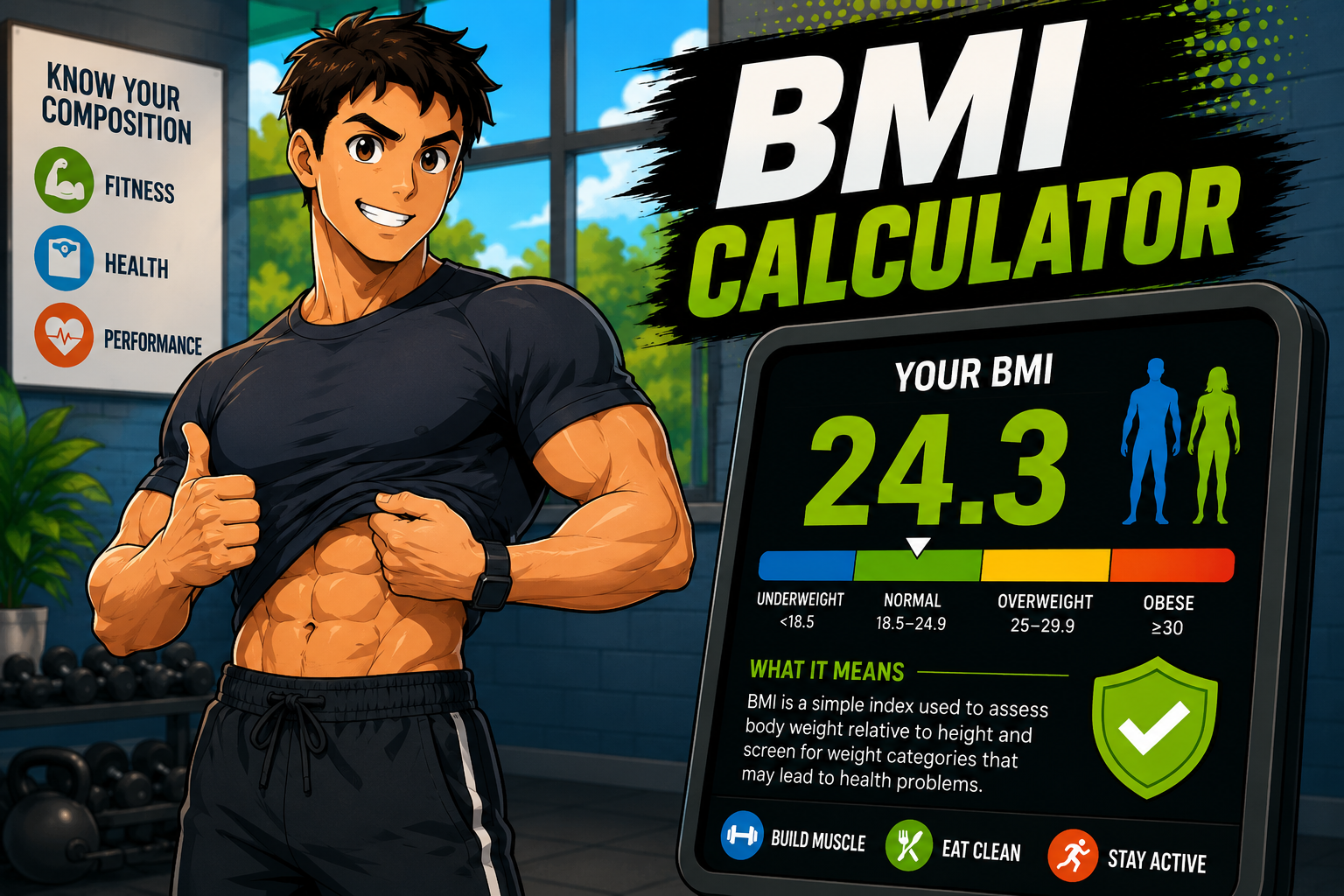
Why use it
BMI is a straightforward way to compare height and weight. It does not tell the whole story about health or body composition, but it is a useful place to start and easy to calculate.
Choose the unit system that matches the measurements you have.
Required. Enter your height in feet and inches.
Required. Enter your weight in pounds.
BMI stands for Body Mass Index. It is a simple estimate based on height and weight that is commonly used as a screening tool for general population health.
US: BMI = (weight in pounds / height in inches^2) x 703
Metric: BMI = weight in kilograms / height in meters^2
Underweight: below 18.5
Healthy weight: 18.5 to 24.9
Overweight: 25.0 to 29.9
Obesity: 30.0 or higher
US example: 5 ft 10 in and 175 lb gives a BMI of 25.1.
Metric example: 178 cm and 79 kg gives a BMI of 24.9.
BMI is a general screening tool. It does not directly measure body fat, muscle mass, athletic build, age, sex, or body composition. Athletes with more muscle may have a higher BMI without having high body fat.
BMI uses only height and weight, while body fat percentage estimates how much of total body weight is fat mass. They answer different questions, so they are best used together.
US BMI formula: BMI = (Weight in pounds / Height in inches^2) x 703.
Metric BMI formula: BMI = Weight in kilograms / Height in meters^2.
The final BMI is rounded to 1 decimal place and the category is shown with the result.
BMI Category Guide
| BMI Range | Category |
|---|---|
| Below 18.5 | Underweight |
| 18.5 to 24.9 | Healthy weight |
| 25.0 to 29.9 | Overweight |
| 30.0 or higher | Obesity |
Choose the unit system that matches your measurements so your result stays accurate.
One reading is useful, but long-term changes are usually more meaningful than a single day.
BMI is useful for screening, but it should not replace a more complete body composition view.
Body fat percentage, performance, and how you feel all add context to the BMI number.
Frequently Asked Questions
BMI is calculated by dividing weight by height squared. In US units, the formula includes a conversion factor of 703.
A healthy BMI is generally considered to be 18.5 to 24.9.
BMI is a general screening tool, so athletes with higher muscle mass may have a higher BMI without having high body fat.
No. BMI does not directly measure body fat. It only uses height and weight.
A BMI of 25.0 to 29.9 is generally considered overweight.
A BMI of 30.0 or higher is generally considered obese.
Yes. You can switch the calculator to metric units and enter height in centimeters and weight in kilograms.
No. BMI uses only height and weight, while body fat percentage estimates how much of total body weight is fat mass.