Game information
- Team lineups
- Player names and jersey numbers
- Batting order
Baseball Resource
This beginner-friendly guide is for parents, coaches, players, team volunteers, and anyone who has been handed a score sheet and asked to keep score at a baseball game.
Baseball scorekeeping can look confusing at first, but it becomes much easier once you understand the scorecard boxes, the fielding positions, and the common scoring symbols.
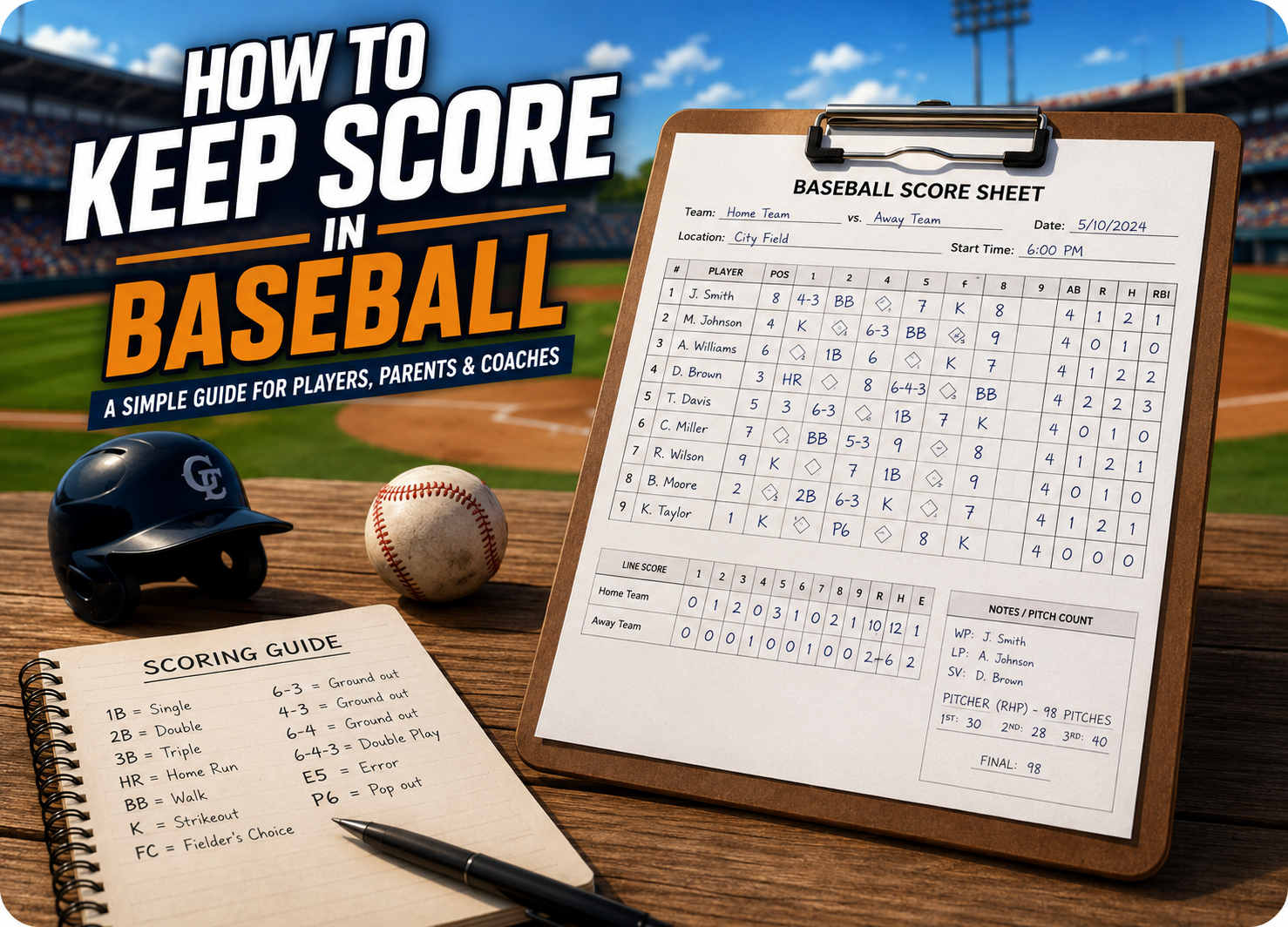
Start here
If you are new to scorekeeping, focus on the basics first: who is batting, where the ball was hit, what the defensive play was, and how the runner moved around the bases.
Free downloads and tools
Use these resources before the first pitch so you have everything ready when the game starts. The PDF links below are placeholder paths until the final download files are added.
TODO: Replace the placeholder PDF URLs once the printable files are added to the site.
Before the game
A little preparation makes scorekeeping much easier once the action starts moving quickly.
Field positions
Scorekeepers use position numbers to record defensive plays quickly. These numbers are standard across baseball scorecards.
| Number | Position |
|---|---|
| 1 | Pitcher |
| 2 | Catcher |
| 3 | First Base |
| 4 | Second Base |
| 5 | Third Base |
| 6 | Shortstop |
| 7 | Left Field |
| 8 | Center Field |
| 9 | Right Field |
Scoring symbols
Keep this table nearby until the symbols become familiar. Most scorecards use a mix of letters, numbers, and simple marks.
| Symbol | Meaning |
|---|---|
| 1B | Single |
| 2B | Double |
| 3B | Triple |
| HR | Home Run |
| BB | Walk |
| K | Strikeout swinging |
| Backwards K | Strikeout looking |
| HBP | Hit by pitch |
| E | Error |
| FC | Fielder's choice |
| SB | Stolen base |
| CS | Caught stealing |
| RBI | Run batted in |
| DP | Double play |
How to score
Use one box per plate appearance and record the play as it happens. The goal is not to be perfect at first. The goal is to stay consistent and understandable.
Examples
These beginner examples show the kind of notes you might make on a score sheet without getting into advanced scorekeeping rules.
Mark the play as 1B or a line to left field, then draw the batter safely to first base.
Write 6-3 if the shortstop fields the ground ball and throws to first for the out.
Mark K in the batter's box to show a swinging strikeout.
Mark BB for the walk, then draw the runner advancing to second on SB.
Mark 2B for the hitter and shade the runner path all the way home when the run scores.
Write the fielders involved, such as 6-4-3 DP, to show a shortstop-to-second-to-first double play.
From the score sheet
Once the score sheet is complete, it becomes a useful record for both individual players and team totals.
| Stat | What the score sheet helps you track |
|---|---|
| Batting average | Hits and official at-bats |
| On-base percentage | Hits, walks, hit by pitches, and plate appearances |
| Slugging percentage | Singles, doubles, triples, and home runs |
| ERA | Earned runs and innings pitched |
| WHIP | Walks plus hits allowed per inning pitched |
| Fielding percentage | Putouts, assists, and errors |
Some stats need more than the score sheet alone, but a well-kept scorecard gives you the foundation for all of them.
Printable score sheet
A printable score sheet gives you a clean place to track lineups, inning-by-inning action, and player stats without trying to remember every play later.
Frequently Asked Questions
The easiest way is to start with a basic score sheet, learn the position numbers, and practice marking simple plays like singles, outs, walks, and strikeouts.
The numbers refer to fielding positions: 1 is pitcher, 2 catcher, 3 first base, 4 second base, 5 third base, 6 shortstop, 7 left field, 8 center field, and 9 right field.
A strikeout swinging is usually marked with K. A strikeout looking is often marked with a backwards K.
When a runner scores, shade or mark the runner path on the diamond and note the run in the inning totals on the score sheet.
Yes. This guide is written for beginners and works well for youth baseball, little league, and other youth scorekeeping situations.
A completed score sheet can help you calculate batting average, on-base percentage, slugging percentage, ERA, WHIP, and fielding percentage.